
Canada FBA Prep Warehouse: Process, Cost Factors and Timeline
From container devan at our Lachine dock to FBA Mississauga check-in: what drives the prep timeline, cost stack, and SKU workflow for Amazon Canada sellers.
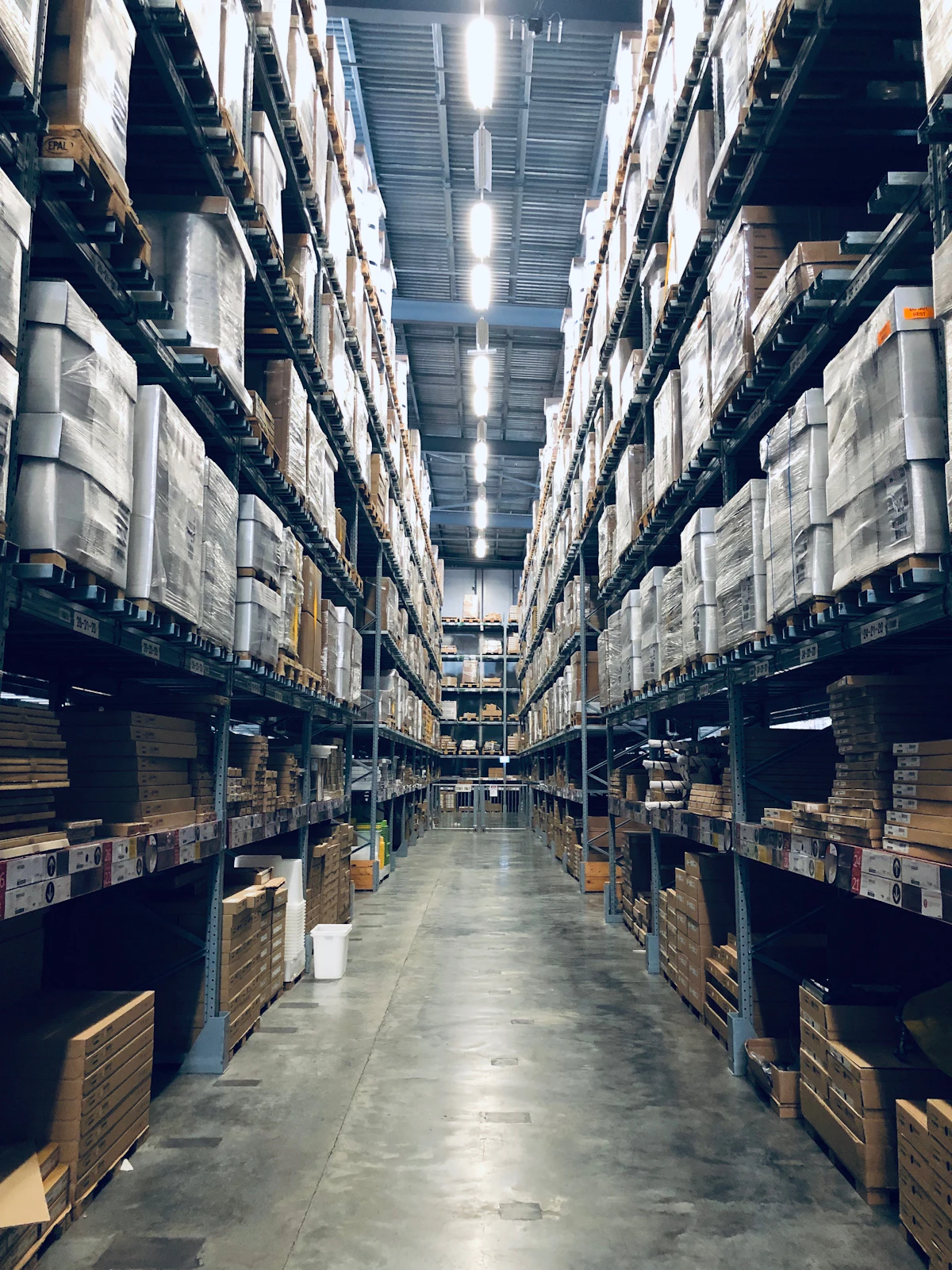
Most of the FBA prep work that lands at our Lachine warehouse starts the same way: a 40-foot container from Rotterdam or Hamburg via Port of Montreal, devanned at our dock, and a stack of cartons that need FNSKU labels, poly bags, or repacking before they can ship to FBA Mississauga or FBA Calgary. The job is straightforward when the SKU manifest matches the carton count and every unit is already labeled to Amazon spec. It's not straightforward when inner packs are unlabeled, FNSKU barcodes are missing, or the seller forgot that Quebec has French-language compliance for certain product categories. We run about 10 to 15 FBA prep jobs per week during Q3 and Q4, and the timeline from container land to FBA check-in sits in the 5 to 10 working-day range depending on CBSA exam status, SKU complexity, and trucker availability for the 401 corridor run to Mississauga.
What FBA Prep Actually Means at the Dock
FBA prep is not a single service. It's a workflow that starts with receiving the container at our Montreal sufferance warehouse, running a cycle count against the seller's advance ship notice (ASN), identifying every SKU, applying Amazon FNSKU labels where missing, poly-bagging units that need it (jewelry, apparel, anything that can open in transit), consolidating cartons by SKU if the seller shipped mixed pallets, and palletizing to Amazon's prep guidelines. The final step is scheduling outbound with a trucker who runs the 401 corridor to FBA Mississauga (YYZ region) or, less often, the TransCanada route to FBA Calgary (YYC region). Each of those steps has a cost driver and a timeline dependency.
The cycle count is where most prep jobs hit their first delay. If the seller's ASN lists 240 units of SKU A and we count 238, we stop and notify the seller before we label anything. If inner cartons are unlabeled and the seller didn't provide a carton-to-SKU map, we open every carton to confirm contents. That adds a day. If the container arrives with a CBSA exam flag, we wait for the exam appointment, the broker sends us the PARS release, and we devan after that. Exam delays are not predictable, but we typically see one to three working days added when CBSA flags the container for physical inspection.
Timeline Breakdown: Container to FBA Check-In
The total timeline from container discharge at Port of Montreal to cartons checked in at FBA Mississauga depends on four stages: drayage from port to warehouse, prep work at our dock, trucker scheduling for FBA delivery, and FBA receive appointment availability. The table below shows the working-day range we see for each stage.
| Stage | Working Days (Typical Range) | Primary Delay Drivers |
|---|---|---|
| Port discharge to warehouse dock | 1–2 days | Container free time, drayage booking, CBSA exam if flagged |
| Devan + cycle count | 1 day | Carton quantity, ASN accuracy, inner pack labeling |
| FNSKU labeling + poly bag + palletize | 1–3 days | SKU mix complexity, label stock availability, poly bag size variety |
| Trucker pickup + 401 corridor transit | 1–2 days | FBA appointment window, trucker availability, weather (winter) |
| FBA Mississauga check-in | 1–2 days | FBA receive backlog, ASN mismatch flags |
End-to-end, we see 5 working days when everything aligns: no exam, clean ASN, all labels provided by the seller, and an FBA appointment within 48 hours of prep completion. We see 10 working days when the container is exam-flagged, the seller forgot to provide FNSKU labels for half the SKUs, and FBA Mississauga has no receive appointments until the following week. The 10-day upper bound is not a failure; it's what happens when the seller didn't plan the inbound timeline with enough buffer before their Amazon launch date.
LCL Consolidation vs Full Container
A significant portion of the FBA prep work we handle comes in as LCL (less-than-container-load) from European sellers routing through Port of Montreal under CETA. LCL changes the workflow in two ways: deconsolidation timing and pallet count variability. When a full container arrives, we devan the entire unit in one session and the carton count is fixed. When LCL arrives, we receive cargo from a consolidated container that holds shipments for multiple consignees. The deconsolidation happens at the freight forwarder's warehouse or at our dock if we are running the LCL consolidation and deconsolidation services for that forwarder. Decon adds half a day to a full day depending on how many consignees share the container.
LCL pallet counts are smaller, which means per-unit prep rates matter more than per-skid rates. A seller shipping 12 pallets of one SKU in a full container pays a blended per-skid rate for labeling and repacking. A seller shipping 3 pallets of mixed SKUs in LCL pays a higher per-unit rate because the labor intensity is the same but the volume discount doesn't apply. We typically see European Amazon sellers choosing LCL when their total shipment is under 10 cubic meters or when they are testing a new product line on Amazon.ca before committing to a full container. The CETA duty exemption makes the Port of Montreal route cheaper than routing through a US port and then trucking into Canada, even after accounting for the LCL decon fee.
Cost Drivers You Actually Pay For
FBA prep pricing is not opaque, but it is multi-component. We publish a rate card with per-unit labeling fees, per-skid handling fees, poly bag unit cost, and trucker rates to FBA. The total cost depends on SKU mix, label complexity, and whether the seller provides FNSKU labels or we print them. The cost stack breaks into four categories:
Per-unit labeling: applying an FNSKU label to each sellable unit. If the seller provides pre-printed labels, the rate is lower. If we print labels on demand from the seller's Amazon Seller Central account, the rate includes label stock cost and printer time. Labeling 5,000 units of a single SKU is faster than labeling 500 units across 10 SKUs because the label swap and verification step repeats for every SKU change.
Poly bagging: units that Amazon requires to be bagged (apparel, anything with small parts, anything that can open) incur a per-unit poly bag fee plus the bag material cost. Bag size matters. A small jewelry item uses a 6x9 poly bag; a winter jacket uses a 12x15 bag. We stock common sizes, but oversized items require a special order, which adds lead time.
Carton consolidation and repalletizing: if the seller shipped mixed SKUs on the same pallet and Amazon requires single-SKU pallets, we depalletize and rebuild. That is a per-skid charge plus labor time. Some sellers try to save money by consolidating at origin, but if the consolidation doesn't match Amazon's prep guidelines, we undo it at the warehouse and the seller pays twice.
Trucker rate to FBA: linehaul from Montreal to FBA Mississauga runs on the 401 corridor. Rates vary by trucker, season, and whether the seller books a dedicated truck or shares an LTL consolidation. We coordinate the booking and the FBA delivery appointment, but the trucker invoices separately. Winter weather adds variability; a snowstorm in Eastern Ontario can delay delivery by a day.
Why some sellers prep in Canada instead of at a US prep house: if you are a Canadian seller selling on Amazon.ca and you prep in the US, your goods cross the border twice (outbound to US prep house, inbound to FBA Canada), and you pay duty both directions unless you run a complex drawback program. Prepping at a warehouse in Canada keeps the goods in Canada and eliminates the cross-border duty loop. European sellers under CETA pay zero duty on qualifying goods landed in Canada, so prepping in Montreal after CETA entry is cheaper than routing through a US port, paying US duty, prepping in the US, and then trucking into Canada under a different customs entry.
Common SKU Traps We See Every Week
Unlabeled inner packs are the most common prep issue. The seller ships a master carton with 24 units inside, but the inner packs have no FNSKU label, only the manufacturer UPC. Amazon will not accept UPC-only units for FBA. We open the master, label every inner unit, and repack. That is a per-unit charge the seller did not budget for because they assumed the master carton label was sufficient.
Missing FNSKU entirely: the seller forgot to generate FNSKU labels in Seller Central, or they generated labels for the wrong ASIN. We catch this during cycle count. The fix is straightforward if the seller can provide labels within 24 hours. If the seller needs three days to regenerate labels and ship them to us, the prep timeline slips three days.
French-language compliance for Quebec: certain product categories (cosmetics, consumables, children's products) require bilingual labeling under Quebec consumer protection law. If the product label is English-only and the seller is shipping to FBA in Canada, CBSA or the province can flag it. We do not provide compliance labeling (that is the seller's responsibility with their regulatory consultant), but we flag it during receiving so the seller knows before the shipment reaches FBA. Some sellers fix it by applying a bilingual sticker over the English label; others pull the SKU and re-import with compliant packaging.
Expiry dating for consumables: if the product has an expiry date and the expiry is within 90 days of the FBA receive date, Amazon will reject the inbound. We check expiry dates during cycle count if the seller flags the SKU as consumable in the ASN. If the seller did not flag it and we discover short-dated product during prep, we stop and notify the seller. The seller either accepts the loss or arranges return shipping to origin.
FBA Receive Appointments and ASN Matching
Amazon assigns FBA receive appointments in Seller Central. The seller creates the shipment, generates the ASN (Amazon calls it a shipment plan), and requests a delivery window. FBA Mississauga typically offers appointments two to five working days out during non-peak season. During Q4, appointments can be seven to ten days out. We coordinate with the seller to book the trucker pickup from our dock so the truck arrives at FBA within the appointment window. If the truck misses the window, FBA can refuse the delivery and the seller has to rebook, which adds another week.
ASN matching is critical. The carton labels we apply at our warehouse must match the ASN the seller uploaded to Amazon. If Amazon scans a carton at FBA receiving and the carton ID does not match the ASN, the carton is flagged for manual review, which delays check-in by days. We verify ASN accuracy during our cycle count, but the seller is responsible for uploading the correct plan in Seller Central before we print carton labels. Miscommunication on this step is the second most common cause of FBA receive delays after missed delivery appointments.
Related: Fulfillment Montreal Requirements: What Your E-Commerce W...
Why the 5-to-10-Day Range Is Not a Guarantee
The timeline we publish is a working-day range based on what we see on our dock week to week. It is not a guarantee because we do not control CBSA exam timing, FBA appointment availability, or trucker delays on the 401 corridor during winter storms. What we do control is the prep workflow: devan speed, cycle count accuracy, label application quality, and coordination with the trucker and the seller. When a seller provides a clean ASN, pre-printed FNSKU labels, and a realistic FBA delivery date, we hit the 5-day end of the range. When the seller discovers labeling issues after the container lands, or when CBSA exams the container and finds a tariff classification dispute, we end up at 10 days or longer.
Sellers who treat the FBA prep timeline as a variable they can compress by calling the warehouse every day do not make the process faster. Sellers who build a 15-day buffer between container ETA and their Amazon launch date do not care if we take 7 days instead of 5, and those are the shipments that move smoothest. The dock does not speed up under pressure; it slows down when the seller changes the SKU list mid-prep or asks us to split one shipment into two FBA destinations after we have already palletized.
Our dock opens at 06:30 EDT. FBA prep jobs cycle through in the order they arrive unless the seller pays for expedited handling. Most sellers do not need expedited handling if they planned the inbound with enough lead time. The sellers who do need it are the ones who booked their Amazon Lightning Deal before confirming their container had cleared customs. We can expedite, but the per-unit rate doubles and the trucker charges a premium for same-day or next-day pickup. That cost usually exceeds what the seller would have saved by waiting for the regular queue.
We run this work daily at our Montreal warehouse. If your next FBA shipment is landing at Port of Montreal and you need it prepped and trucked to Mississauga, walk through the timeline with us.
Frequently Asked Questions
How long does FBA prep take from container arrival at Port of Montreal to delivery at FBA Mississauga?
We typically see 5 to 10 working days end-to-end. The range depends on CBSA exam timing, SKU labeling complexity, and FBA receive appointment availability. Shipments with clean ASNs, pre-printed FNSKU labels, and no exam flags usually land at the 5-day end. Shipments requiring label printing, poly bagging, or carton consolidation, or those delayed by CBSA exam, run closer to 10 days.
What is the cost difference between full container and LCL for FBA prep?
LCL incurs a higher per-unit prep rate because volume discounts do not apply to smaller shipments. Full container loads benefit from per-skid blended rates when the SKU count is low. LCL also adds a deconsolidation fee at the warehouse. European sellers under CETA often choose LCL for test shipments under 10 cubic meters despite the higher per-unit cost because the total landed cost is still lower than routing through a US port and paying US duty.
Do you provide FNSKU labels or does the seller need to send them?
We can print FNSKU labels on demand from the seller's Amazon Seller Central account, or the seller can provide pre-printed labels. Printing on demand adds label stock cost and a per-unit printing fee. Sellers who provide pre-printed labels pay a lower per-unit application rate. If the seller forgets to generate FNSKU labels before the container arrives, we notify them during cycle count and the prep timeline slips until they provide the labels.
What happens if the container is flagged for CBSA exam?
We wait for the exam appointment, the broker sends us the PARS release after the exam clears, and then we devan the container. Exam delays typically add one to three working days to the timeline. We do not control exam scheduling; CBSA assigns the appointment and the broker coordinates it. The seller should build a buffer into their FBA launch timeline to account for potential exam delays.
Can you handle French-language compliance labeling for Quebec?
No. French-language compliance is the seller's responsibility with their regulatory consultant or labeling vendor. We flag compliance issues during receiving if we see English-only labels on consumables or cosmetics, but we do not apply compliance stickers or relabel products. Some sellers fix it by shipping bilingual stickers to us for application as part of the prep workflow; others pull the SKU and re-import with compliant packaging.
What is the trucker rate from Montreal to FBA Mississauga?
Trucker rates vary by season, trucker availability, and whether the seller books a dedicated truck or shares an LTL consolidation. We coordinate the booking and the FBA delivery appointment, but the trucker invoices separately. Winter weather on the 401 corridor can add delays. Sellers should expect the trucker portion of the cost to be a variable line item; we provide rate guidance when the seller requests a quote.
Why do some sellers prep in Canada instead of at a US prep house?
Canadian sellers selling on Amazon.ca avoid cross-border duty loops by prepping in Canada. If you prep in the US, your goods cross the border twice and you pay duty both directions unless you run a drawback program. European sellers under CETA pay zero duty on qualifying goods landed in Canada, so prepping in Montreal after CETA entry is cheaper than routing through a US port, paying US duty, prepping in the US, and trucking back into Canada under a different entry.
Related News

Last-Mile Delivery Service: Where E-Commerce Margin Dies
Last-mile delivery isn't the happy ending of an import—it's where most importers watch margin evaporate. By the time a container clears CBSA and reaches the warehouse, the hard part is done. Then comes the final step: moving 500 individual parcels to customer addresses across the metro, and that's where the unit cost climbs and the SLA breaks. A Montreal 3PL sees this weekly.

Amazon FBA in Canada: Where Consolidation and Compliance Collide
Amazon FBA changes how Canadian importers move inventory—goods flow faster through distribution, but they hit compliance gates and consolidation costs before they land in Amazon fulfillment centers. The ops reality is messier than the consumer-facing service looks. We see importers running goods through consolidation, hitting label-compliance issues, and sometimes wishing they'd calculated drayage costs to Amazon facilities before committing.

Last-Mile E-Commerce: Warehouse Operations in Montreal
Q4 e-commerce volumes hit warehouse ops hard. Last-mile delivery from Montreal warehouses isn't just a drayage problem—it's about dock door cycles, cross-dock cutoffs, and when orders actually ship. We run 7 dock doors and see order velocity spike 300% by November.